03 Aug 2026
Obesity and Joint Replacement: Weight and BMI Guidelines in Amritsar

Dr. Puneet Kumar
30 Oct 2025
Call +91 80788 80788 to request an appointment.
At Livasa Hospitals — with advanced imaging centres across Punjab including Livasa Mohali, Livasa Amritsar, Livasa Hoshiarpur and Livasa Khanna — 3D medical imaging is changing how physicians diagnose, plan, and treat disease. This article explains what 3D imaging is, how it works, where it helps most, safety considerations, cost and accessibility in Punjab, and what the future holds for this transformative technology. If you would like to book an appointment, call +91 80788 80788 or book 3D imaging appointment Livasa Hospitals.
Three-dimensional medical imaging refers to a set of imaging techniques and post-processing methods that create volumetric, manipulable representations of anatomy or pathology. Unlike traditional two-dimensional X-ray or static ultrasound images, 3D imaging gives clinicians depth, perspective, and the ability to rotate, slice, and measure structures in multiple planes. This capability is particularly valuable in complex conditions such as cancer, trauma, congenital cardiac disease, neurosurgical disorders and advanced orthopedic reconstruction.
Over the last decade, medical imaging technology in Punjab and across India has progressed rapidly. Global market analyses indicate the medical imaging market has been expanding at a steady rate due to aging populations, rising chronic disease, and improvements in imaging hardware and software. In practical terms, this means patients in cities like Mohali, Amritsar, Hoshiarpur and Khanna now have access to high-resolution 3D CT scans, 3D MRI imaging and advanced digital radiology services locally — reducing travel, waiting times and delays in critical diagnosis.
At Livasa Hospitals we combine advanced scanners with experienced radiologists and multidisciplinary clinical teams. Our digital radiology Punjab platform is designed to deliver fast, patient-friendly 3D imaging for diagnostic clarity and better treatment planning. Whether evaluating a complex pelvic fracture for orthopedics, mapping a tumour for oncology, planning neurosurgery, or studying coronary anatomy with 3D MR angiography, the power of 3D imaging leads to more informed decisions and improved outcomes.
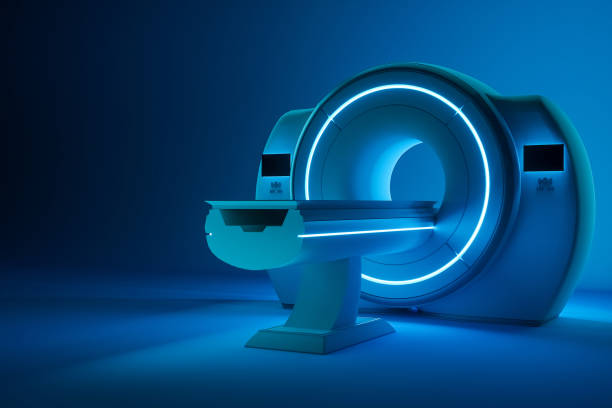
3D medical imaging is produced either directly by volumetric scanners (most modern CT and MRI machines acquire 3D datasets) or by reconstruction software that converts series of 2D slices into a 3D volume. Common modalities that provide 3D data include computed tomography (CT), magnetic resonance imaging (MRI), 3D ultrasound, PET-CT and cone-beam CT used in dental imaging. Each modality captures different tissue contrasts and functional information.
The process has two major steps:
Specific 3D techniques commonly used at Livasa Hospitals include:
These reconstructions not only support diagnosis but also facilitate interactive discussions with patients and caregivers. For patients in Punjab seeking the best 3D medical imaging in Punjab, Livasa’s imaging centres in Mohali and Amritsar prioritise high-resolution datasets and expert interpretation to deliver accurate, timely reports.
The clinical utility of 3D medical imaging spans nearly every medical specialty. Below are the most impactful uses with examples of how Livasa Hospitals applies these techniques in daily clinical practice.
Oncology: 3D imaging provides precise tumour localization, volumetric measurements and accurate staging. For cancers of the lung, liver, pancreas, head and neck, and pelvic organs, 3D CT and MRI aid in biopsy planning, radiation therapy targeting and surgical margin assessment. When planning multidisciplinary cancer care in Amritsar or Mohali, our oncologists use volumetric imaging to track treatment response and guide targeted therapies.
Orthopedics: Preoperative 3D CT reconstructions and 3D templating are invaluable for complex joint replacements, fracture fixation, and deformity corrections. With services such as robotic orthopedic surgery and arthroscopy support, Livasa’s orthopedic teams combine 3D reconstructions to select implant sizes, anticipate challenges and shorten surgical time — improving recovery for patients from Ludhiana, Patiala and nearby districts.
Cardiology: 3D imaging — including MR angiography and cardiac CT angiography with 3D reconstructions — clarifies coronary anatomy, structural heart disease, and planning for interventions like TAVI or complex PCI. Our cardiac imaging services in Punjab support decision-making for minimally invasive cardiac surgery and electrophysiology procedures.
Neurosurgery: High-resolution 3D MRI helps map tumours, vascular malformations and spinal pathologies with millimetre precision. These datasets are used for neuronavigation, improving safety for delicate brain and spine operations.
Obstetrics and fetal medicine: 3D prenatal ultrasound adds depth to fetal anatomical surveys and helps in counselling for congenital anomalies. Parents in Mohali and Amritsar benefit from clear 3D images during prenatal visits at Livasa.
Dentistry and maxillofacial surgery: Cone-beam CT 3D imaging supports implant placement, impacted tooth assessment and trauma management with excellent bony detail. This is particularly useful for patients seeking advanced dental CT services across Punjab.
3D imaging's greatest strength is turning ambiguous findings into actionable information. For example, a suspected bone fracture that is unclear on 2D X-ray can be fully characterized on a 3D CT reconstruction, revealing fracture lines and fragment displacement that direct surgical strategy. Similarly, in oncology, volumetric measurements of tumours allow more accurate assessment of response to chemotherapy or radiotherapy than diameter measurements alone.
Benefits for patients include:
From a healthcare systems perspective in Punjab, adopting 3D imaging at centres like Livasa Mohali and Livasa Amritsar leads to improved workflow efficiency, fewer repeat scans, and often shorter hospital stays. Studies show that precise imaging-guided procedures can reduce operative time and complications—translating into cost savings and better outcomes for patients across regions such as Hoshiarpur and Khanna.
Choosing the right imaging modality depends on clinical question, tissue type, patient factors (e.g., pregnancy, implants) and cost. The table below summarises key differences and typical uses—useful when considering options at an imaging center in Punjab.
| Modality | Strengths | Best suspected uses |
|---|---|---|
| CT (3D CT reconstruction) | Fast, excellent bone detail, high spatial resolution, widely available | Trauma, fracture, lung nodule evaluation, preoperative orthopedic planning |
| MRI (3D MRI, MR angiography) | Superior soft-tissue contrast, vascular imaging without radiation | Brain, spine, soft-tissue tumours, cardiac structure, vascular mapping |
| Ultrasound (3D/4D) | Real-time, no radiation, portable, ideal for obstetrics and some soft tissues | Prenatal imaging, hepatobiliary, pediatric abdomen, thyroid, vascular flow |
| PET-CT | Functional imaging combined with anatomic CT—excellent for metabolic activity | Cancer staging, treatment response, detection of metastatic disease |
At Livasa Hospitals, the imaging team chooses the modality based on the clinical need and patient safety. For example, 3D MR angiography Punjab is preferred for vascular mapping when radiation avoidance is desired, while 3D CT is selected for urgent trauma or complex bone detail.
Many patients and referring doctors ask whether 3D imaging is always necessary. The answer is that 3D imaging is not always required, but when anatomy is complex or precision matters, 3D provides clear advantages. The table below compares traditional 2D imaging to 3D imaging to help you understand the trade-offs.
| Feature | 2D imaging | 3D imaging |
|---|---|---|
| Anatomic detail | Limited to single plane; overlapping structures may hide pathology | Volumetric detail; ability to slice in any plane and rotate structures |
| Surgical planning | Useful for basic planning | Essential for complex reconstructions, implants, and navigation |
| Radiation exposure | Often lower for plain X-rays | CT-based 3D includes higher radiation; MRI/Ultrasound 3D avoid radiation |
| Time and cost | Quicker and cheaper for many screening tasks | Higher cost and longer processing time but greater diagnostic value when needed |
Decisions at Livasa are made collaboratively. A clinician in Mohali assessing a suspected brain tumour may request a 3D MRI for precise craniotomy planning, while a simple chest X-ray might suffice for routine respiratory issues. When 3D imaging is indicated, our radiology teams in Amritsar and Hoshiarpur provide rapid turnaround and clear reports tailored to the surgical or therapeutic question.
Safety and patient comfort are central to Livasa’s imaging services. Different modalities pose different considerations:
Preparing for a 3D scan typically involves:
Our staff in Livasa Khanna, Mohali, Amritsar and Hoshiarpur educate patients on what to expect and ensure a comfortable experience. Patient-friendly 3D imaging services Punjab at Livasa emphasize clear communication so patients know why a test is recommended and how it will influence care.
Cost and availability influence patient choices. In Punjab, the spread of advanced imaging centres has improved access but price ranges vary depending on modality, location and whether contrast or advanced post-processing is required. Below is an indicative cost comparison commonly found across Punjab; prices are approximate and subject to change—please contact us for exact quotes.
| Service | Typical cost range in Punjab (approx.) | Notes |
|---|---|---|
| 3D CT scan (routine, non-contrast) | ₹2,500 – ₹7,000 | Higher for high-resolution, multislice CT and emergency services |
| 3D CT scan with contrast / CTA | ₹6,000 – ₹15,000 | Includes contrast agent and radiologist interpretation |
| 3D MRI (high-resolution) | ₹5,000 – ₹18,000 | Varies by scanner strength (1.5T vs 3T), sequences and contrast |
| 3D MR angiography | ₹8,000 – ₹20,000 | Non-invasive vascular mapping; avoids ionizing radiation |
| 3D dental CBCT | ₹3,000 – ₹8,000 | Commonly used for implants and detailed dental planning |
Livasa Hospitals aim to provide affordable 3D imaging Punjab with transparent pricing and same day 3D imaging options when clinically appropriate. For patients seeking the best CT scan center in Punjab or the best MRI center in Punjab, Livasa offers a blend of technology, expert radiologists, and patient-centric pathways to reduce delays—particularly important for urgent oncology and trauma care.
One of the most exciting uses of 3D imaging is converting scans into patient-specific surgical guides and 3D-printed models. These models help surgeons rehearse complex procedures, choose optimal implant sizes and explain the operation to patients and families in clear, visual terms. At Livasa Hospitals, 3D reconstruction CT Punjab and 3D MR angiography datasets are routinely used to create printed models for:
Integration with intraoperative navigation systems enables real-time guidance using the same 3D datasets. For patients in Mohali, Amritsar and beyond, this means smaller incisions, shorter operative times and fewer complications. The combination of 3D imaging for orthopedic surgery planning Punjab and modern surgical tools is particularly transformative for joint replacements and limb-salvage procedures.
The future of 3D medical imaging is powered by artificial intelligence (AI), cloud-based image sharing, and continual hardware improvements. AI algorithms can now assist with automated segmentation, tumour volumetry, fracture detection and even prognostic predictions. At Livasa Hospitals, research and imaging education are exploring how AI-enhanced pipelines can accelerate report turnaround and increase diagnostic accuracy while maintaining clinical oversight by board-certified radiologists.
Other advancements to watch:
Livasa Hospitals are investing in continuous professional development and research in 3D imaging, with initiatives to expand education and awareness across Punjab. By combining technology with clinical expertise, Livasa aims to remain at the forefront of delivering the best 3D medical imaging in Punjab.
If you or a loved one have been referred for a 3D scan at Livasa Hospitals—whether in Mohali, Amritsar, Hoshiarpur or Khanna—here are practical steps to ensure a smooth experience:
To schedule or discuss the right imaging approach for your condition, call +91 80788 80788 or book 3D imaging appointment Livasa Hospitals. Our staff will recommend optimal modality—CT, MRI, ultrasound or PET—and advise on cost, expected report time, and preparatory steps.
3D medical imaging is no longer the preserve of a few specialised centres — it is a practical, powerful tool that improves diagnostic accuracy, guides minimally invasive and complex surgery, and enhances patient understanding of disease. In Punjab, Livasa Hospitals’ imaging centres in Mohali, Amritsar, Hoshiarpur and Khanna combine advanced scanners, expert radiology, and multidisciplinary care to deliver accessible, high-quality 3D imaging services.
If you are exploring options for 3D imaging for cancer diagnosis, orthopedic surgery planning, cardiac evaluation, prenatal imaging or dental procedures, Livasa is equipped with the technology and teams to support precise, patient-centred care. We advocate informed decision-making: discuss the expected benefits, risks, and costs with your clinician to choose the most appropriate imaging strategy.
To learn more or to schedule a 3D imaging study at Livasa Hospitals in Mohali, Amritsar, Hoshiarpur or Khanna, call +91 80788 80788 or book 3D imaging appointment Livasa Hospitals. Our radiology team will explain options, provide cost estimates (including 3D CT scan cost in Punjab and 3D MRI cost in Punjab), and arrange a patient-friendly appointment.
Livasa Hospitals — advancing healthcare with compassionate service and the best in medical imaging technology in Punjab.
Obesity and Joint Replacement: Weight and BMI Guidelines in Amritsar
Diabetes, Heart Disease and Joint Replacement: Multispeciality Care in Amritsar
Home Modifications After Joint Replacement: Safety Tips for Amritsar Patients
Livasa Healthcare Group Corporate Office,Phase-8, Industrial Area, Sector 73, Sahibzada Ajit Singh Nagar, Punjab 160071
| Mohali | +91-99888 23456 |
| Amritsar | +91-99887 49494 |
| Hoshiarpur | +91-99883 35353 |
| Nawanshahr | +91-75081 82337 |
| Khanna | +91-98888 05394 |
