03 Aug 2026
Obesity and Joint Replacement: Weight and BMI Guidelines in Amritsar

Dr. (Prof.) Rakesh Sudan
21 Apr 2026
Call +91 80788 80788 to request an appointment.
Cardiology | Hypertension & Emergency Heart Care — Livasa Hospitals, Livasa Amritsar
Coronary angiography is one of the most important diagnostic and interventional procedures available for evaluating blood flow to the heart and detecting obstructive coronary artery disease. For many patients in Amritsar and across Punjab, the decision to undergo an angiogram raises practical questions: How much does coronary angiography cost in Amritsar?, is it available nearby?, and when is it medically necessary? This comprehensive guide explains the procedure, indications, typical pricing ranges in Amritsar and Punjab, alternatives, risks, and how to choose the right facility — including practical information about services at Livasa Amritsar.
This article is written for patients and families seeking clear, authoritative information with an emphasis on local relevance. We also cover cost-related questions such as diagnostic coronary angiogram cost Punjab, coronary angiography with stent cost Amritsar, angioplasty and angiography cost Amritsar, angiography package price Livasa Amritsar, and tips on affordability and insurance coverage. If you are searching for an "angiography test near me" in Amritsar, this guide will help you understand when the test is recommended, what to expect, and how pricing is typically structured.
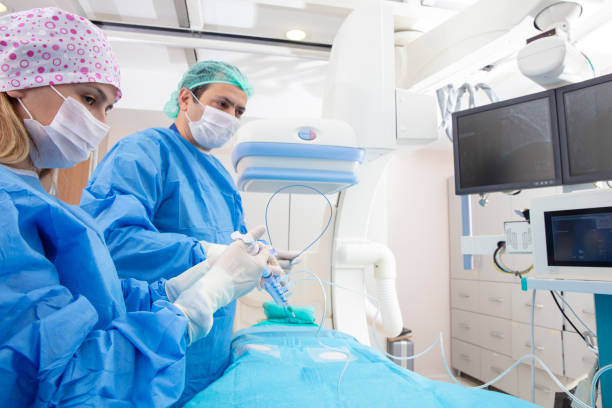
Coronary angiography (often called a coronary angiogram or cardiac catheterization) is a minimally invasive procedure that uses X-ray imaging to visualize the coronary arteries — the blood vessels that supply the heart muscle. During the test, a thin, flexible tube called a catheter is gently guided through an artery (commonly in the wrist or groin) into the coronary arteries. A contrast dye is injected through the catheter to create live X-ray images (angiograms) so the cardiologist can identify blockages, narrowing (stenosis), or other abnormalities.
There are two broad uses of coronary angiography:
Modern coronary angiography is frequently performed through the radial artery in the wrist (transradial approach) or the femoral artery in the groin (transfemoral approach). The transradial technique is increasingly preferred due to less bleeding and faster mobilization after the procedure. The test typically takes 20–60 minutes for a diagnostic angiogram and may take longer if interventions (PCI, stent) are performed.
In simple terms, if a clinician suspects a significant coronary blockage that might require immediate treatment — or needs exact anatomical detail before planning surgery or procedures — a coronary angiogram is the definitive test. In many emergency heart attack situations, urgent angiography can be life-saving.
Determining whether you "really need" a coronary angiography depends on the clinical context. Not every patient with chest pain needs an invasive angiogram — many people are first evaluated with non-invasive tests. However, there are clear situations where angiography is strongly recommended:
In contrast, patients with atypical chest pain and low pre-test probability of coronary artery disease are often assessed with non-invasive testing first. Shared decision-making is essential — cardiologists weigh the risks and benefits, consider comorbidities (kidney disease, bleeding risks), and review patient preferences before recommending invasive angiography.
For residents of Amritsar and nearby communities in Punjab, timely referral is important. Emergency departments and chest pain units at regional hospitals — including Livasa Amritsar — can triage and rapidly arrange angiography when indicated. If you search for "heart blockage test price" or "coronary angiogram cost Amritsar" online, focus first on whether the test is clinically appropriate rather than only on price.
Coronary angiography is performed in a cardiac catheterisation laboratory (cath lab) by an interventional cardiologist and supporting team. The overall steps are standardized but vary slightly by approach and whether an intervention is planned:
Two commonly compared approaches are transradial and transfemoral access. Below is a table comparing the two to help you understand benefits and considerations:
| Procedure type | Benefits | Recovery time |
|---|---|---|
| Transradial (wrist) | Lower bleeding risk, earlier ambulation, greater patient comfort | 4–6 hours observation; discharge same day or next day |
| Transfemoral (groin) | Useful for complex interventions, larger devices; familiar technique | 6–12 hours or overnight observation |
Typical duration varies: a purely diagnostic angiogram may take 20–40 minutes, while angiography plus PCI (stenting) can take 45–120 minutes depending on complexity. Contrast-related kidney risk is minimized by ensuring adequate hydration and adjusting contrast volume.
Coronary angiography is generally safe when performed by experienced teams, but like any invasive procedure it carries potential risks. Understanding them helps patients make informed decisions and recognise warning signs during recovery. Common and uncommon complications include:
The risk profile also depends on patient factors: age, multiple comorbidities (diabetes, renal impairment), peripheral vascular disease, and emergency vs elective status. For emergency angiography during acute myocardial infarction, the life-saving benefit usually far outweighs procedural risk.
Before the test, the cardiology team at Livasa Amritsar or any reputable centre will review your medical history, explain potential complications, obtain informed consent, and take steps to minimise risks — such as pre-procedure hydration, use of low-osmolar contrast agents, and skilled vascular access techniques.
Cost is a frequent concern. The price of a coronary angiography in Amritsar and across Punjab varies widely depending on multiple factors. There is no single fixed "angiography price Amritsar" — instead, costs depend on whether the procedure is diagnostic only or includes interventions (angioplasty, stent), the type of stent used (bare-metal vs drug-eluting), urgency (elective vs emergency), hospital category (private tertiary centre vs government hospital), consumables, imaging and ICU charges, and whether the patient has complications requiring longer stay.
Typical cost ranges you may encounter in Amritsar/Punjab (estimates for guidance, actual prices vary by hospital and case complexity):
Below is a comparison table illustrating cost differences between procedure types and hospital categories to help you estimate angiography cost Amritsar:
| Procedure | Private hospital (approx.) | Government hospital (approx.) | Notes |
|---|---|---|---|
| Diagnostic coronary angiogram | INR 20,000–60,000 | INR 5,000–20,000 | Costs include cath lab, doctor fees, imaging; excludes extended hospitalization |
| Angiography + single drug-eluting stent (PCI) | INR 1,00,000–2,50,000 | INR 30,000–1,20,000 | Stent cost and device charges are major drivers |
| Angiography + multi-vessel PCI | INR 2,00,000–4,50,000+ | INR 80,000–3,00,000+ | Complex interventions, ICU stay increase total cost |
Important factors that influence the final bill:
For current, tailored price estimates in Amritsar, ask hospitals for a line-item quotation or angiography package price Livasa Amritsar. Livasa Hospitals provides transparent package options and can estimate costs for diagnostic angiography or angiography with stent insertion — call +91 80788 80788 or book online at https://www.livasahospitals.com/appointment.
In many clinical scenarios, non-invasive tests are used before considering invasive coronary angiography. Alternatives can provide useful diagnostic information with less risk and cost. Choosing an alternative depends on the probability of coronary artery disease, the nature of symptoms, and the need for anatomical detail.
Common alternatives include:
The following table compares diagnostic accuracy, benefits and limitations of common approaches:
| Test | Role / benefits | Limitations |
|---|---|---|
| CT coronary angiography (CTCA) | Non-invasive anatomical assessment, excellent for ruling out significant CAD in low/intermediate risk | Less effective in heavily calcified arteries; cannot perform immediate PCI |
| Stress test / stress echo | Assesses functional ischemia, inexpensive and widely available | Less specific for anatomy; limited in patients unable to exercise |
| Nuclear perfusion imaging (SPECT/PET) | High sensitivity for ischemia and guiding revascularisation decisions | More expensive; radiation exposure |
| Cardiac MRI | Great tissue characterisation and viability assessment | Limited availability for coronary stenosis detection; time-consuming |
If non-invasive tests strongly suggest obstructive coronary disease or if the patient is unstable, invasive coronary angiography is often preferred because it provides definitive anatomy and allows immediate treatment. For many patients in and around Amritsar, CTCA or stress testing may be appropriate first steps and are often lower in cost — search terms like "angiography price Amritsar" and "diagnostic angiography cost Amritsar" should be considered alongside non-invasive test prices for comparison.
The cost of coronary angiography can be a significant concern. Fortunately, many patients in India benefit from health insurance, government schemes, and hospital packages that reduce out-of-pocket expenses. Understanding coverages and asking the right questions can reduce surprises.
Key tips for affordability:
Below is a sample checklist to request from the hospital billing team before admission:
At Livasa Hospitals, Livasa Amritsar, the cardiology team strives to provide transparent cost estimates and assistance with insurance pre-authorisation. For a personalised angiography cost estimate in Amritsar — whether diagnostic coronary angiogram cost Punjab or coronary angiography with stent cost Amritsar — call +91 80788 80788 or book online: https://www.livasahospitals.com/appointment.
Proper preparation reduces complications and ensures the best outcome. Your cardiology team will provide specific instructions, but common preparation steps include fasting, temporarily stopping certain medications, and arranging transport home for elective procedures.
Pre-procedure guidance typically includes:
Typical immediate post-procedure expectations:
Know the warning signs that require urgent medical attention: increasing bleeding, swelling at the access site, chest pain, shortness of breath, fainting, fever, or signs of stroke (sudden weakness or speech difficulty). If any of these occur after discharge in Amritsar, contact Livasa Amritsar immediately at +91 80788 80788.
Selecting where to have your coronary angiography matters for outcomes, safety and overall patient experience. Consider operator experience, cath lab infrastructure, infection control, critical care support, transparent pricing, and the availability of associated services such as cardiac rehabilitation.
Reasons patients in Amritsar and surrounding areas choose Livasa Hospitals, Livasa Amritsar:
For personalised cost estimates and timely appointments for coronary angiography or a second opinion, contact Livasa Amritsar at +91 80788 80788 or book online. Our team will guide you through clinical suitability, expected costs, insurance assistance, and next steps.
Below are common questions patients ask when considering coronary angiography in Amritsar or Punjab:
If you or a loved one is experiencing symptoms suggestive of coronary artery disease or you have abnormal test results, timely evaluation matters. For transparent, patient-centred care and a clear angiography cost estimate in Amritsar, reach out to Livasa Hospitals, Livasa Amritsar. Call +91 80788 80788 or book an appointment online. Our cardiology team is here to discuss clinical need, answer cost questions (including angiography package price Livasa Amritsar), and arrange prompt evaluation.
For quick searches use terms like "angiography test near me", "coronary angiography cost Amritsar", or "coronary angiography price near me Amritsar" to find local options — and then call the centre to get an itemised estimate and appointment.
Disclaimer: This article is educational and not a substitute for professional medical advice. Prices are indicative and can vary; always consult with your healthcare provider and the hospital billing team for an accurate estimate tailored to your clinical needs. For more information or to schedule a consultation at Livasa Amritsar, call +91 80788 80788 or visit https://www.livasahospitals.com/appointment.
Obesity and Joint Replacement: Weight and BMI Guidelines in Amritsar
Diabetes, Heart Disease and Joint Replacement: Multispeciality Care in Amritsar
Home Modifications After Joint Replacement: Safety Tips for Amritsar Patients
Livasa Healthcare Group Corporate Office,Phase-8, Industrial Area, Sector 73, Sahibzada Ajit Singh Nagar, Punjab 160071
| Mohali | +91-99888 23456 |
| Amritsar | +91-99887 49494 |
| Hoshiarpur | +91-99883 35353 |
| Nawanshahr | +91-75081 82337 |
| Khanna | +91-98888 05394 |
