03 Aug 2026
Obesity and Joint Replacement: Weight and BMI Guidelines in Amritsar

Dr. Bikram Jit Singh
19 Dec 2025
Call +91 80788 80788 to request an appointment.
Expert dermatology guidance from Livasa Hospitals — Livasa Amritsar. For appointments call +91 80788 80788 or book online.
Eczema — commonly known as atopic dermatitis — is a chronic inflammatory skin condition that affects people of all ages. In Amritsar and across Punjab, rising urbanisation, changing lifestyles, and increasing environmental allergens have contributed to greater visibility of eczema in clinics and pediatric practices. This article provides an in-depth, patient-friendly guide to eczema causes, symptoms, diagnosis, medical and non-medical treatment options, cost considerations, and practical prevention and long-term management strategies specifically tailored for residents of Amritsar and nearby areas.
Globally, atopic eczema affects roughly 15–20% of children and about 1–3% of adults, though prevalence varies by region and urbanisation. In India and Punjab, population-based studies and clinic reports estimate higher rates in children in urban centres, often in the range of 5–15%, with increases linked to pollution, indoor allergens, and changes in hygiene practices. At Livasa Amritsar, dermatology specialists see a broad spectrum of eczema cases — from mild seasonal flares to severe, therapy-resistant disease — and provide comprehensive diagnostic and therapeutic solutions.
This guide is structured to help patients and caregivers in Amritsar understand available treatment options, make informed decisions about care, and find the best eczema specialist in Punjab when needed. It includes medical treatments, comparisons of therapy options, local cost guidance, practical home-care advice tailored to the Amritsar climate, and information on when to seek urgent care.
Eczema is a broad term covering several inflammatory skin conditions. The most common is atopic dermatitis, a chronic relapsing condition characterised by itchy, red, dry, and sometimes oozing or crusted patches. Other types include contact dermatitis (allergic or irritant), nummular eczema, dyshidrotic eczema, and seborrheic dermatitis. While symptoms often first appear in infancy or childhood, many people experience flares or persistent disease into adulthood.
Pathophysiology involves a combination of genetic predisposition, skin barrier dysfunction (loss of protective lipids and proteins such as filaggrin), immune dysregulation with type 2 inflammatory pathways, and environmental triggers. In the context of Amritsar and Punjab, common aggravating factors include pollen and grass allergens, household dust mites, textile irritants (wool or synthetic fabrics), local climate variations (hot summers and humid monsoon), and exposure to hard water or chemical detergents.
Eczema is not contagious. It is associated with other allergic conditions such as asthma and allergic rhinitis (the so-called allergic march). Recognising the specific eczema subtype is important because treatment and long-term planning differ — for example, contact dermatitis requires identification and avoidance of the offending chemical, while atopic eczema management focuses on restoring the skin barrier and controlling inflammation.
At Livasa Amritsar, the dermatology team provides diagnostic classification and personalised treatment plans, from simple barrier creams and emollients for mild disease to advanced systemic agents and phototherapy for moderate-to-severe cases. Early intervention can significantly reduce flares, improve quality of life, and prevent secondary infections.
Eczema is multifactorial. Understanding underlying causes and local risk factors helps families in Amritsar take practical steps to reduce flare-ups. The major contributors include genetic susceptibility, environmental exposures common in Punjab, immune system factors, and lifestyle choices. Below we detail the most relevant risk factors seen in local clinics and how they interact.
1. Genetic predisposition: A family history of eczema, asthma, or allergic rhinitis raises the risk significantly. Mutations or variations in skin barrier genes (e.g., filaggrin) increase susceptibility to dry skin and barrier breakdown.
2. Environmental allergens: Amritsar’s mix of urban pollution and agricultural activity exposes residents to pollen, dust, and particulate matter that can exacerbate atopic eczema. Household dust mites are a pervasive trigger in humid months, and indoor mould during monsoon contributes to persistent symptoms.
3. Irritants and soaps: Frequent bathing with harsh soaps, use of detergent-impregnated clothing, or direct contact with occupational chemicals (farmers, factory workers) can precipitate irritant contact dermatitis. Use of strong antiseptics or bleaching agents is common in some households and can worsen eczema.
4. Climate and water quality: Hard water with high mineral content — reported in several parts of Punjab — can dry the skin and cause barrier dysfunction. Seasonal swings (hot summers, humid monsoons, cold winters) can each provoke different types of flares.
5. Lifestyle and comorbidities: Stress, sleep deprivation, and infections (especially staphylococcal skin infections) can worsen eczema. Poor nutrition, obesity, and metabolic conditions alter immune function and inflammatory responses, influencing chronicity.
6. Pediatric risk factors: Early-life antibiotic use, lack of breastfeeding, and early exposure to certain allergens may increase the risk in children. On the other hand, some studies suggest that early controlled exposure to common microbes may be protective — patterns that vary by region.
Identifying and modifying modifiable causes is an integral part of the eczema care plan at Livasa Amritsar. Dermatologists work with patients to map triggers and implement environment-specific strategies along with medical therapy.
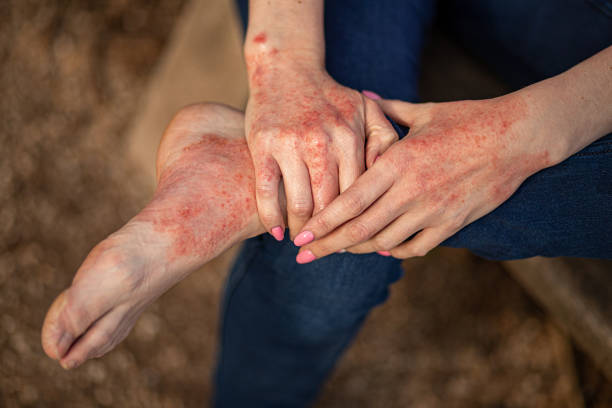
Eczema symptoms are variable in severity and appearance depending on age and disease type. Typical signs include itchy (pruritic), dry, red patches; cracked or leathery skin (lichenification) in chronic disease; oozing and crusting if secondary infection occurs; and small fluid-filled bumps (vesicles) in acute flares. Infants often have facial and scalp involvement, while children and adults commonly show flexural (inside elbows, behind knees) or hand/foot involvement.
Important red flags that require prompt medical attention include:
Many patients in Amritsar first try home remedies; while mild eczema can respond well to barrier care, persistent itch affecting sleep, growth (in children), work productivity, or mental health should prompt a specialist evaluation. If over-the-counter moisturisers or short steroid courses have limited benefit or cause side effects, an eczema specialist in Amritsar can tailor a multi-modal plan including prescription therapies and allergy guidance.
At Livasa Amritsar, the dermatology team emphasises early recognition of infection and proper wound care to prevent complications. They also provide guidance on school and workplace accommodations and strategies to reduce itch-scratch cycles that perpetuate inflammation.
A careful clinical history and physical examination by a dermatologist are the cornerstone of eczema diagnosis. In most cases, experienced clinicians at Livasa Amritsar can diagnose atopic dermatitis or contact dermatitis by examining the distribution and morphology of lesions and reviewing trigger history. However, targeted tests help refine diagnosis and guide therapy.
Common diagnostic steps and tests available in Amritsar include:
Livasa Amritsar’s dermatology clinic has access to modern diagnostic modalities and allergy testing through an integrated laboratory. The diagnostic process is personalised: for example, a child with recurrent hand eczema may undergo patch testing to determine an occupational or household trigger, while a severe adult case might need blood marker monitoring before initiating oral immunomodulators.
Accurate diagnosis avoids unnecessary treatments and helps estimate the likely course, costs, and time to improvement — vital considerations for patients in Amritsar weighing different therapy options.
Medical management of eczema follows a stepwise approach: restore the skin barrier with regular emollients, control inflammation with topical agents, treat infections, and escalate to systemic therapies or phototherapy for moderate-to-severe disease. In Amritsar, the availability of dermatology specialists and therapeutic modalities at centres such as Livasa Hospitals allows patients to access modern evidence-based treatments tailored to local needs.
Topical therapies:
Systemic therapies:
Phototherapy:
Controlled ultraviolet (UV) light therapy, especially narrowband UVB, is an effective non-drug option offered at many dermatology centres. Phototherapy can be a steroid-sparing therapy for widespread disease and is particularly useful in adults. Sessions are typically administered multiple times per week over several weeks, and long-term safety considerations are discussed with patients.
Infection management and adjuncts:
When bacterial or viral infections complicate eczema, prompt treatment with appropriate oral or topical antibiotics or antiviral agents is necessary. In parallel, clinicians emphasise skin care education, behavioural measures to reduce scratching, and treatment adherence — all of which dramatically improve outcomes.
At Livasa Amritsar, treatment plans are individualised, combining local knowledge of common allergens and environmental triggers with international treatment protocols to ensure safe, effective care.
Choosing a treatment depends on disease severity, patient age, comorbidities, cost considerations, and lifestyle. The table below compares major treatment categories to help patients in Amritsar understand benefits, risks, and typical recovery or response timelines.
| Treatment type | Benefits | Risks/side effects | Typical response time |
|---|---|---|---|
| Emollients and moisturisers | Restores barrier, reduces flares, safe for all ages | Rare sensitivity to additives/fragrance | Days to weeks, ongoing |
| Topical corticosteroids | Rapid inflammation control, effective for flares | Skin thinning with prolonged use, rebound if misused | Hours to days for symptom relief |
| Topical calcineurin inhibitors | Steroid-sparing, safe for face and folds | Transient burning on application | Days to weeks |
| Phototherapy (narrowband UVB) | Effective for widespread disease, steroid-sparing | Sunburn-like reactions; long-term skin cancer risk with chronic use | Several weeks of regular sessions |
| Systemic immunosuppressants | Effective for severe refractory eczema | Requires blood monitoring; infection risk | Weeks to months |
| Biologics (e.g., dupilumab) | Targeted therapy with significant improvement in many patients | Injection site reactions, conjunctivitis in some; high cost | Weeks to months for optimal effect |
Discussing the table with your dermatologist in Amritsar helps decide which option offers the best balance of effectiveness, safety, and affordability for your situation. Livasa Amritsar dermatologists will review local factors (e.g., occupation, childcare responsibilities, travel for phototherapy) when recommending a plan.
Non-pharmacological strategies are essential complements to medical treatment. They reduce triggers, restore the skin barrier, and limit flares. For patients in Amritsar, modifications often focus on managing local allergens, water quality, and seasonal climate effects. These measures are safe to use alongside prescribed therapies and frequently yield significant improvement.
Do’s:
Don’ts:
Common home remedies used in Amritsar:
Always consult your Livasa Amritsar dermatologist before starting new home remedies, particularly for infants and severe cases. The team emphasises safety, patch-testing potential allergens, and monitoring for secondary infection.
Eczema is often a long-term condition that requires ongoing management. A combination of maintenance skin care, trigger control, periodic specialist review, and patient education leads to the best outcomes. There are important differences between pediatric and adult eczema care that Livasa Amritsar addresses through age-appropriate plans.
Long-term prevention tips for residents of Amritsar:
Pediatric considerations:
In children, eczema can affect growth, sleep, school attendance, and psychosocial development. Parents in Amritsar should prioritise early dermatologist referral for recurrent or severe disease. Treatment choices must account for age-appropriate formulations, minimising systemic exposure while maintaining disease control. Allergy evaluation (food or inhalant) is considered in selected children with severe or atypical patterns.
Adult considerations:
Adults may present with hand eczema related to occupation, chronic lichenification from years of scratching, or adult-onset atopic dermatitis. Management focuses on restoring function, preventing work-related triggers, and addressing comorbidities (e.g., obesity, metabolic syndrome) that can influence outcomes. Advanced therapies including phototherapy, systemic immunosuppressants, and biologics are more commonly used in adult patients with persistent moderate-to-severe disease.
Follow-up schedule:
Cost is an important factor for many patients in Punjab when choosing eczema therapies. Costs vary widely depending on the type of treatment, frequency, and whether long-term systemic or biologic therapy is required. Below is an approximate comparative overview of typical costs in Amritsar to help patients plan financially. All estimates are illustrative and actual costs should be confirmed with your provider at Livasa Amritsar.
| Treatment category | Relative cost | Approx. cost range in Amritsar (INR) | Notes |
|---|---|---|---|
| Basic emollients and OTC creams | Low | 200–1,500 per month (depending on brand) | Ongoing monthly expense for maintenance |
| Prescription topical steroids / calcineurin inhibitors | Low–Moderate | 100–2,000 per prescription | Cost varies with strength and pack size |
| Phototherapy (narrowband UVB) | Moderate | 1,000–3,000 per session; 20–30 sessions commonly needed | Travel and session frequency affect overall cost |
| Systemic immunosuppressants | Moderate | 2,000–10,000 per month (including monitoring) | Requires blood tests and specialist visits |
| Biologics (e.g., dupilumab) | High | Variable; often high monthly costs — discuss insurance/assistance | Cost can be a major limiting factor though many patients experience dramatic improvement |
Many patients in Amritsar begin with conservative, lower-cost measures (emollients, topical steroids) and escalate only if these are insufficient. Livasa Amritsar’s team discusses cost-effective long-term strategies and helps patients explore insurance options, government schemes, or manufacturer assistance programs when advanced therapies are indicated.
Choosing the right eczema specialist matters. Look for a dermatologist with experience in both paediatric and adult atopic dermatitis, access to diagnostic testing (patch testing, allergy tests), phototherapy services, and the ability to prescribe and monitor systemic or biologic therapies. Local reputation, clinic accessibility, and clear communication about costs and follow-up are also important.
What to expect during your first visit at Livasa Amritsar:
To book an appointment with an eczema specialist at Livasa Amritsar, call +91 80788 80788 or use the online booking portal at Visit appointment page. The dermatology team provides both in-person consultations and guidance on telehealth follow-ups when appropriate for maintenance care.
Livasa Amritsar also collaborates with paediatricians, allergists, and mental health professionals to provide holistic care — addressing sleep, school/daycare needs, and the emotional impact of chronic skin disease on patients and families.
Eczema is manageable with the right combination of education, consistent skin care, trigger management, and medical therapies. For residents of Amritsar and surrounding areas in Punjab, the emphasis is on practical, locally tailored care that takes into account climate, common allergens, water quality, and occupational factors. Early specialist referral helps avoid complications and reduces long-term disease burden.
Practical next steps:
For expert care tailored to local needs, contact Livasa Hospitals — Livasa Amritsar. Call +91 80788 80788 or book an appointment online. The dermatology team at Livasa Amritsar provides comprehensive eczema diagnosis, medical and non-medical treatment options, allergy testing, phototherapy, and follow-up care to help you and your family manage eczema effectively.
If eczema is limiting sleep, school, work, or quality of life, expert care can make a difference. Call +91 80788 80788 or book an appointment with Livasa Amritsar’s dermatology team today.
Obesity and Joint Replacement: Weight and BMI Guidelines in Amritsar
Diabetes, Heart Disease and Joint Replacement: Multispeciality Care in Amritsar
Home Modifications After Joint Replacement: Safety Tips for Amritsar Patients
Livasa Healthcare Group Corporate Office,Phase-8, Industrial Area, Sector 73, Sahibzada Ajit Singh Nagar, Punjab 160071
| Mohali | +91-99888 23456 |
| Amritsar | +91-99887 49494 |
| Hoshiarpur | +91-99883 35353 |
| Nawanshahr | +91-75081 82337 |
| Khanna | +91-98888 05394 |
