03 Aug 2026
Obesity and Joint Replacement: Weight and BMI Guidelines in Amritsar

Dr. Harinder K Bali
21 May 2025
Call +91 80788 80788 to request an appointment.
Heart surgery is an essential aspect of cardiac care, with techniques evolving significantly over the years. Among these techniques, open heart surgery and closed heart surgery are two of the most commonly performed procedures. Understanding the differences between these types of surgeries is crucial for patients and their families, as it can aid in making informed decisions regarding treatment. At Livasa Hospitals, we specialize in cardiac surgery in Punjab and offer comprehensive care tailored to individual patient needs.
In this blog, we will explore the fundamental aspects of open vs closed heart surgery, detailing the procedures, their indications, benefits, risks, and recovery processes. We aim to provide a thorough understanding so patients can approach their heart surgery journey with confidence.
Open heart surgery involves a surgical procedure where the chest is opened to gain access to the heart. This type of surgery is typically performed to address complex heart issues such as coronary artery disease, heart valve repairs/replacements, congenital defects, and more. The heart may need to be temporarily stopped during the surgery, with patients placed on a heart-lung machine to ensure proper blood circulation and oxygenation.
Open heart surgery is usually performed under general anesthesia, and the incision is made down the center of the chest to access the heart. Some common procedures include:
Recovery from open heart surgery typically involves a stay in the hospital for several days, followed by a gradual return to normal activities over weeks. Patients often benefit from a structured cardiac rehabilitation program for optimal recovery.
Unlike open heart surgery, closed heart surgery refers to procedures performed on the heart without the need to open the chest. In closed heart surgery, surgeons utilize small incisions to access the heart. It is generally preferred for less complex conditions and tends to result in shorter recovery times compared to open heart surgery.
This type of surgery often involves catheter-based techniques, such as:
Closed heart surgery can be performed under local or general anesthesia, depending on the complexity of the procedure. Patients may experience quicker recovery times, often returning to normal daily activities within a few days, making it a less invasive option for suitable candidates.
While both open and closed heart surgeries serve the essential function of treating heart-related issues, there are critical differences between the two approaches. Understanding these differences helps patients in making informed choices. Below is a comparative overview:
| Aspect | Open Heart Surgery | Closed Heart Surgery |
|---|---|---|
| Incision | Large incision in the chest | Small incisions or catheter-based access |
| Recovery Time | Several weeks | Few days to a week |
| Anesthesia | General anesthesia | Local or general anesthesia |
| Indications | Complex heart conditions | Less complex heart conditions |
| Hospital Stay | Days to weeks | Less than a week |
Deciding between open and closed heart surgery ultimately depends on an individual's specific heart condition:
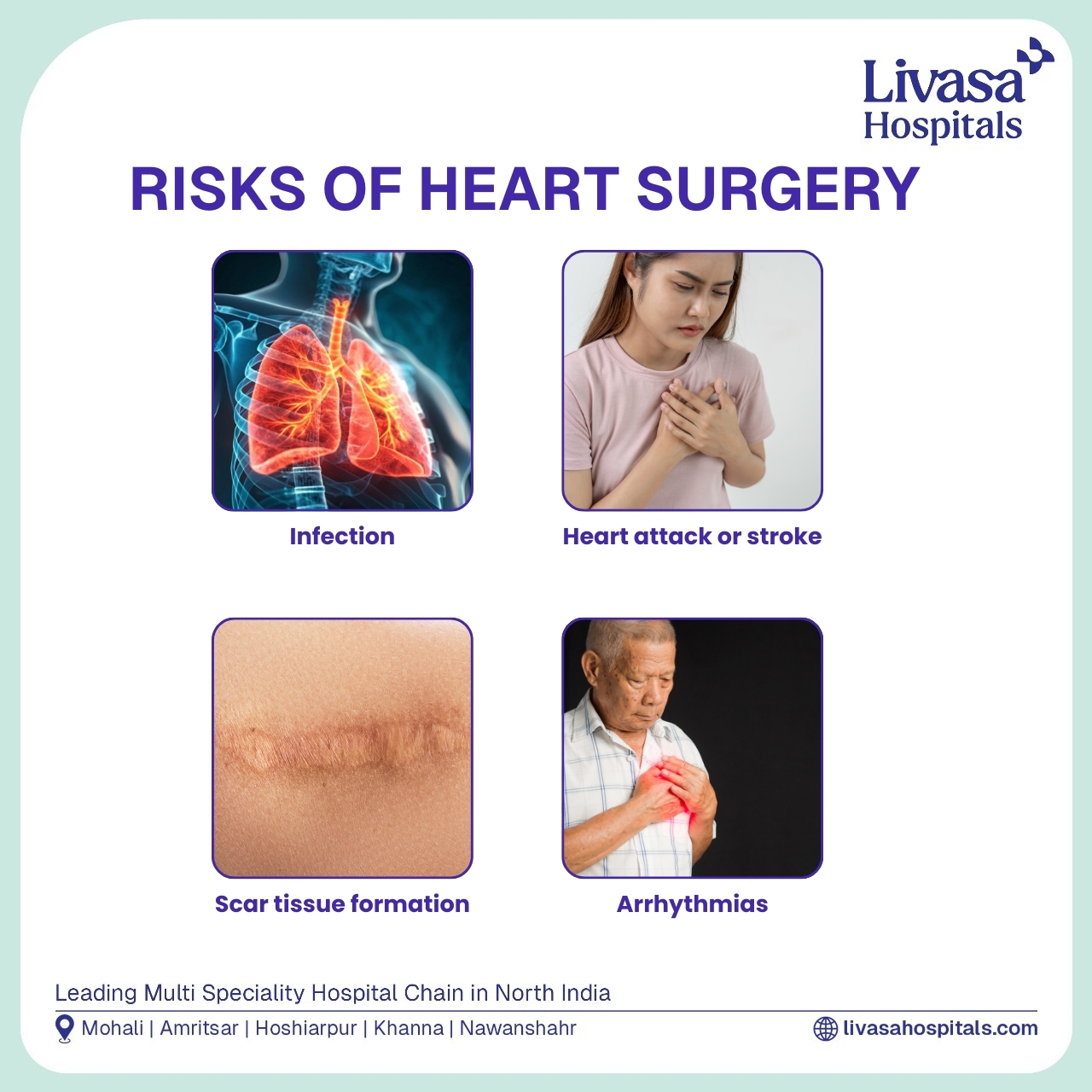
All surgical procedures involve inherent risks, and heart surgeries are no exception. The risks associated with both open and closed heart surgeries include:
While open heart surgery presents a higher risk due to its invasive nature, advancements in medical technology and surgical techniques have significantly mitigated these risks. It's essential for patients to discuss their specific risk factors with their healthcare provider and weigh the potential benefits against the associated risks.
Recovery is a vital component of heart surgery, influencing overall outcomes. The recovery process can vary considerably between open and closed heart surgeries:
Selecting the right surgeon and healthcare facility for heart surgery is critical for optimal outcomes. Patients should seek experienced cardiac surgeons in Punjab who specialize in both open and closed heart surgeries. Consider the following when making your choice:
At Livasa Hospitals, we have a team of top heart surgeons in Punjab dedicated to providing safe and effective care. Our approach ensures that every patient receives personalized attention and comprehensive treatment options tailored to their needs.
Understanding the differences between open and closed heart surgeries enables patients to make informed decisions about their heart health. Each procedure comes with its own set of benefits, risks, and recovery processes. It is imperative to consult with a skilled cardiologist to explore the most suitable options tailored to individual health conditions.
If you or a loved one is facing heart surgery, Livasa Hospitals offers state-of-the-art cardiac care in Punjab. Our dedicated team is here to support you at every step of the journey—from diagnosis to recovery.
For more information or to schedule a consultation, please call us at +91 80788 80788 or book an appointment today.
Obesity and Joint Replacement: Weight and BMI Guidelines in Amritsar
Diabetes, Heart Disease and Joint Replacement: Multispeciality Care in Amritsar
Home Modifications After Joint Replacement: Safety Tips for Amritsar Patients
Livasa Healthcare Group Corporate Office,Phase-8, Industrial Area, Sector 73, Sahibzada Ajit Singh Nagar, Punjab 160071
| Mohali | +91-99888 23456 |
| Amritsar | +91-99887 49494 |
| Hoshiarpur | +91-99883 35353 |
| Nawanshahr | +91-75081 82337 |
| Khanna | +91-98888 05394 |
