03 Aug 2026
Obesity and Joint Replacement: Weight and BMI Guidelines in Amritsar

Dr. Bikram Jit Singh
19 Dec 2025
Call +91 80788 80788 to request an appointment.
Welcome to a comprehensive, patient-friendly guide on psoriasis in Amritsar and across Punjab. This article is written for patients, families and caregivers seeking clear, age-specific information about causes, symptoms, diagnosis and modern treatment options available locally at Livasa Hospitals — Livasa Amritsar. For appointments, call +91 80788 80788 or book online at Livasa appointment.
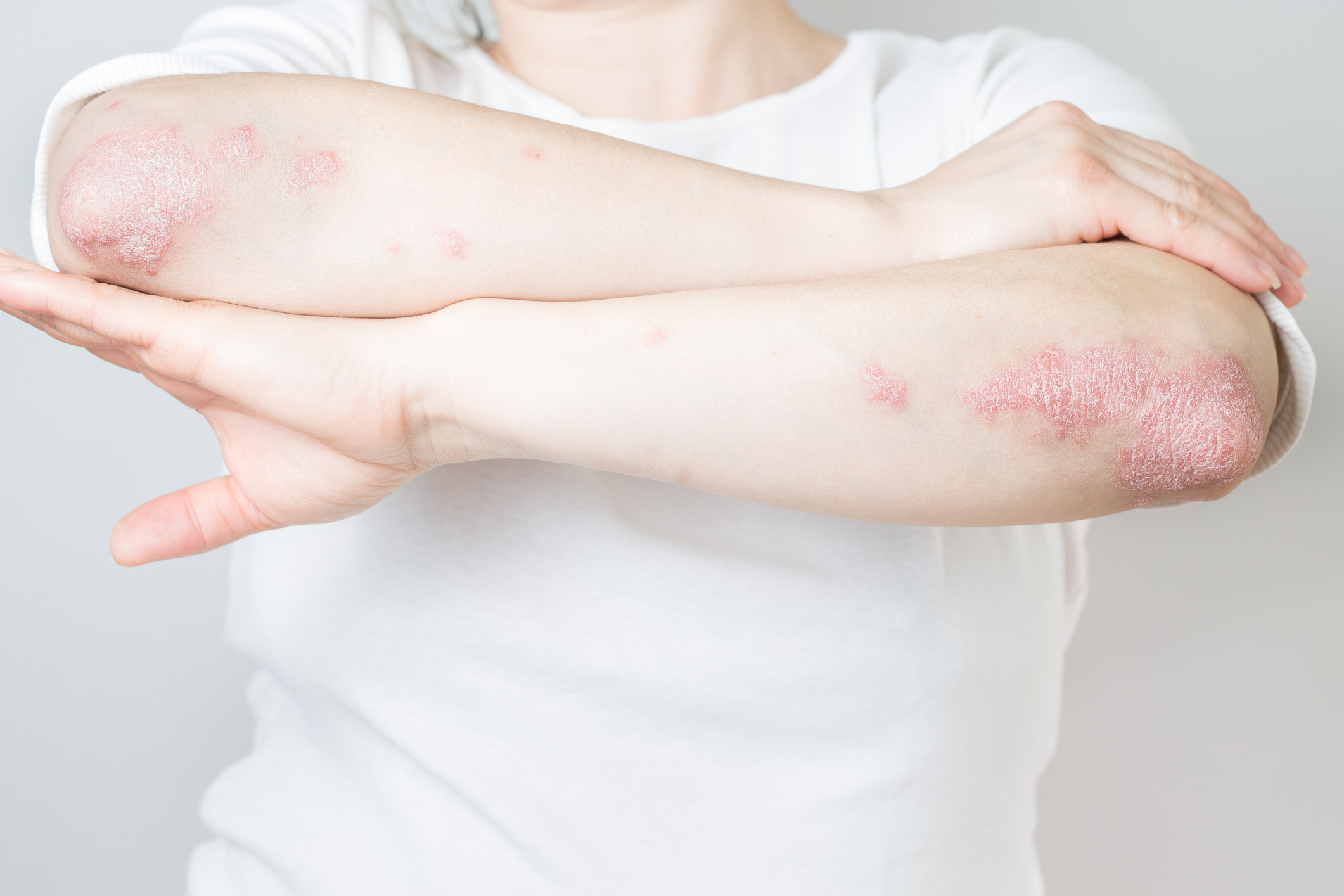
Psoriasis is a chronic, immune-mediated skin disorder characterized by red, scaly plaques that can appear anywhere on the body. It affects people of all ages, from infants to seniors, and has several clinical forms including plaque, guttate, inverse, pustular and erythrodermic psoriasis. While not contagious, psoriasis can significantly affect quality of life due to itching, pain and visible skin changes. In India and particularly in Punjab, psoriasis is a frequently encountered condition in dermatology clinics and hospitals.
Globally, psoriasis affects about 2–3% of the population. Indian studies estimate prevalence ranging from 0.44% to 2.8% depending on the region and the diagnostic criteria. In Punjab and Amritsar specifically, dermatology clinics report a steady number of patients seeking care for both new and chronic cases. At Livasa Amritsar, our dermatology team provides age-appropriate diagnosis and tailored management plans to meet the needs of children, adolescents, adults and seniors.
The goal of this guide is to present practical, trustworthy information on causes, age-specific symptoms, diagnosis and the full spectrum of treatment options available in Amritsar — from topical creams and phototherapy to systemic agents and advanced biologic therapies — along with prevention, home care, and when to seek urgent care.
Psoriasis arises from a combination of genetic predisposition and immune system dysregulation. In people with psoriasis, immune cells called T lymphocytes become overactive and trigger inflammation and accelerated growth of skin cells. This results in the characteristic thick, scaly plaques. Understanding causes and risk factors — and that many triggers differ by age — helps patients and families in Amritsar and Punjab reduce flares and select appropriate treatment strategies.
Major causes and risk factors include:
Local and cultural factors also influence disease patterns in Punjab: climatic changes between hot summers and cold winters can trigger flare-ups, and certain traditional topical substances used without guidance may irritate the skin. Recognising and reducing modifiable risk factors — such as smoking cessation, weight management and early treatment of infections — is an important part of care at Livasa Amritsar’s dermatology clinic.
Symptoms of psoriasis vary by age and by type of psoriasis. Recognizing age-specific presentations helps parents, teenagers, adults and seniors seek timely dermatology evaluation in Amritsar. Here are the common presentations for different age groups:
Psoriasis in infants and young children:
Psoriasis in children and adolescents:
Psoriasis in adults:
Psoriasis in elderly patients:
For all age groups, symptoms may include itching, burning sensation and, in severe cases, painful cracking of the skin. Psoriatic arthritis — joint pain and swelling associated with psoriasis — can occur at any age and needs early detection to prevent joint damage.
Accurate diagnosis begins with a careful clinical examination by a dermatology specialist. At Livasa Amritsar, dermatologists evaluate the skin pattern, distribution, nail and scalp involvement and medical history, including family history and triggers. Diagnostic steps commonly used in Amritsar include:
Local availability: Livasa Amritsar is equipped with dermatology consultation rooms and access to pathology laboratories and imaging centers for needed investigations. If biopsy or systemic agent monitoring is required, our team provides coordinated care and interprets results in the context of each patient's age and overall health. Early diagnosis in children and adolescents is crucial to reduce progression and improve quality of life.
Psoriasis management is individualized based on age, severity, affected body surface area, presence of psoriatic arthritis, comorbidities and patient preferences. Treatment strategies fall into topical therapy, phototherapy, traditional systemic agents and biologic therapies. Below is a clear comparison to help patients in Amritsar and Punjab understand the benefits, limitations and recovery expectations.
| Treatment type | Benefits | Typical duration / monitoring |
|---|---|---|
| Topical therapy (corticosteroids, vitamin D analogues, calcineurin inhibitors) | Effective for mild to moderate localized psoriasis; minimal systemic effects when used appropriately. | Continuous or intermittent use for weeks to months; monitor skin thinning with potent steroids. |
| Phototherapy (NB-UVB, PUVA) | Good response for moderate disease; avoids systemic side effects; safe for many age groups with precautions. | Multiple sessions per week for 6–12 weeks; requires clinic visits; long-term monitoring for skin cancer risk. |
| Traditional systemic agents (methotrexate, cyclosporine, acitretin) | Effective for severe disease or psoriatic arthritis; generally lower cost than biologics. | Requires blood test monitoring (liver, kidney), periodic follow-up; duration varies by agent. |
| Biologic therapies (anti-TNF, anti-IL17, anti-IL23) | High efficacy for moderate-to-severe psoriasis and psoriatic arthritis; improved quality of life and targeted immune control. | Long-term therapy with periodic monitoring for infections; higher cost, but often best for refractory cases. |
| Combination therapy | Using two modalities (e.g., topical + phototherapy or systemic + topical) increases effectiveness and may reduce side effects. | Customized duration; requires specialist supervision and follow-up. |
Cost considerations in Punjab and Amritsar: topical treatments and phototherapy are generally more affordable, while biologics are costly but sometimes subsidized or available via patient-assistance programs. Below is a general cost comparison for reference (approximate values shown for the region):
| Treatment | Typical cost in Punjab | Typical cost in Amritsar |
|---|---|---|
| Topical creams/ointments | INR 200–1500 per month | INR 200–1200 per month |
| Phototherapy (NB-UVB) | INR 150–500 per session | INR 150–400 per session |
| Methotrexate or oral systemic | INR 200–1500 per month (monitoring extra) | INR 200–1000 per month |
| Biologics | INR 40,000–2,00,000 per month (depending on drug) | INR 45,000–2,50,000 per month |
These cost ranges are approximate and depend on specific drugs, frequency and local subsidies. The dermatology team at Livasa Amritsar discusses financial options, generics and access programs to make effective treatment more accessible.
Managing psoriasis requires tailoring treatment to age, disease severity and lifestyle. Here is a practical, age-focused approach commonly used at Livasa Amritsar to balance effectiveness and safety.
Children (infants to 12 years):
Adolescents and young adults:
Adults:
Seniors:
Across ages, the emphasis at Livasa Amritsar is on safety, minimizing long-term side effects and supporting patients with education and follow-up. Biologic therapies have transformed outcomes for many patients with severe disease and psoriatic arthritis; however, candidacy depends on infection screening and overall health.
Daily skin care and lifestyle modifications are essential adjuncts to medical therapy. These measures help reduce flare frequency and severity and are particularly valuable for families in Amritsar and across Punjab where climate and lifestyle factors influence disease activity.
Key home care tips:
Do's and don'ts:
Practical tips for Amritsar residents: keep emollients in both winter and summer as indoor heating and air conditioning can dry out skin. During festivals when travel and changes in routine occur, maintain medication adherence and carry emergency contact information for your dermatologist.
Psoriatic arthritis (PsA) is an inflammatory joint disease associated with psoriasis that can lead to irreversible joint damage if not treated early. It may present with joint pain, stiffness (especially in the morning), swelling, reduced range of motion and tendon pain. PsA can affect peripheral joints and the spine.
Red flags and emergency signs that require prompt evaluation at Livasa Amritsar or an emergency department include:
Long-term care principles:
Statistics highlight the need for coordinated care: worldwide, up to 30% of psoriasis patients develop psoriatic arthritis. Locally in Punjab, dermatologists report a similar prevalence, underlining the need for early referral for joint symptoms. Livasa Amritsar offers integrated dermatology and rheumatology consultations to diagnose PsA early and initiate disease-modifying therapy.
When seeking care for psoriasis in Punjab or Amritsar, consider the following when choosing a specialist:
Livasa Amritsar: Our dermatology team provides evidence-based, age-specific psoriasis care. We offer:
Booking a consultation is straightforward: call +91 80788 80788 or use the online booking portal at Livasa Hospitals appointment. Our clinic serves patients from across Amritsar and nearby areas seeking advanced dermatology treatment and ongoing care.
Below are common questions patients ask at Livasa Amritsar along with clear answers to help you make informed decisions.
Q: Can psoriasis be cured?
A: Currently, psoriasis is considered a chronic condition with no guaranteed cure, but effective treatments — including topical therapies, phototherapy and biologic agents — can induce long-term remission and control symptoms. The goal is symptom control, remission and improvement in quality of life.
Q: Is psoriasis hereditary?
A: There is a genetic predisposition; having a first-degree relative with psoriasis increases your risk, but not all family members will develop the disease.
Q: Are biologics safe for children and seniors?
A: Some biologics are approved for adolescents and certain agents have data in pediatric populations. For seniors, biologics may be used with careful infection screening and consideration of comorbidities. A specialist at Livasa Amritsar will discuss risks and benefits.
Q: How quickly do treatments work?
A: Topicals may show improvement within weeks; phototherapy often requires multiple sessions over several weeks; systemic agents and biologics can show marked improvement within weeks to a few months depending on the drug and individual response.
Q: What should I do in an emergency?
A: Seek urgent evaluation if you develop fever with widespread redness or scaling, sudden severe joint swelling, or signs of serious infection while on systemic therapy. Livasa Amritsar provides emergency advice via phone and prompt clinic access when required.
If you or a family member in Amritsar or elsewhere in Punjab are living with psoriasis, early specialist consultation improves outcomes. Book a consultation with the dermatology team at Livasa Amritsar or call +91 80788 80788. Our specialists will provide age-specific guidance, diagnostic work-up and a personalised management plan.
Disclaimer: This content is intended for educational purposes and does not replace personalised medical advice. For a clinical evaluation, please consult the dermatology team at Livasa Amritsar.
Obesity and Joint Replacement: Weight and BMI Guidelines in Amritsar
Diabetes, Heart Disease and Joint Replacement: Multispeciality Care in Amritsar
Home Modifications After Joint Replacement: Safety Tips for Amritsar Patients
Livasa Healthcare Group Corporate Office,Phase-8, Industrial Area, Sector 73, Sahibzada Ajit Singh Nagar, Punjab 160071
| Mohali | +91-99888 23456 |
| Amritsar | +91-99887 49494 |
| Hoshiarpur | +91-99883 35353 |
| Nawanshahr | +91-75081 82337 |
| Khanna | +91-98888 05394 |
